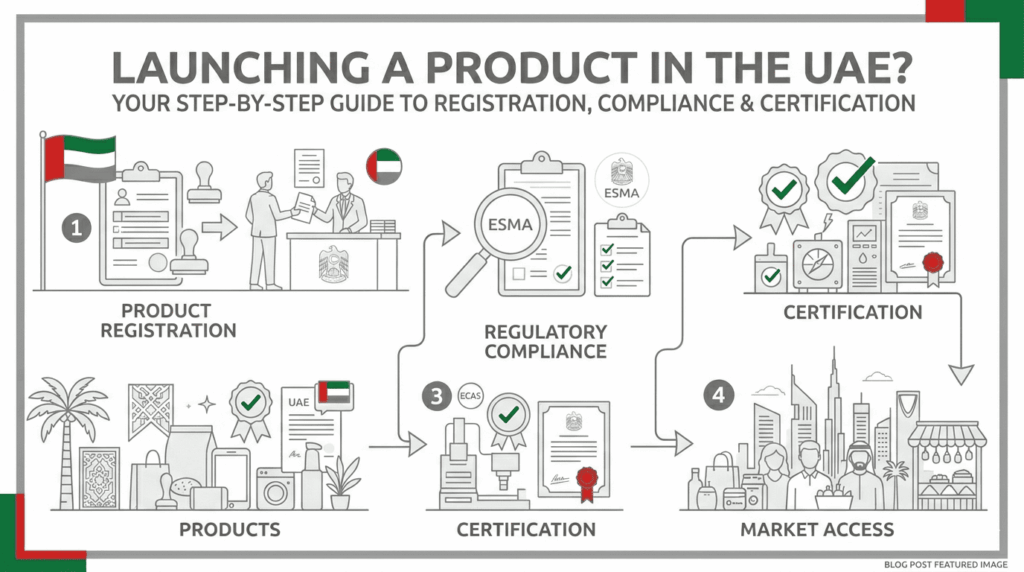
The UAE is one of the most attractive markets in the world for launching new products. With a strong economy, a diverse consumer base, and a business-friendly environment, it offers excellent opportunities for local and international brands alike.
However, before your product reaches store shelves, online marketplaces, distributors, or end users, there are several regulatory requirements that must be addressed. Many first-time business owners underestimate the importance of product registration, compliance approvals, and certifications, only to face delays, fines, or import restrictions later.
This guide will walk you through the key regulatory steps involved in launching a product in the UAE and help you understand what needs to be done before going to market.
Step 1: Identify Your Product Category
The first step is determining exactly what type of product you plan to sell.
Different product categories fall under different UAE regulatory authorities and compliance requirements.
Examples include:
- Food and beverages
- Cosmetics and personal care products
- Medical devices
- Pharmaceuticals
- Electrical and electronic products
- Children’s products and toys
- Construction materials
- Chemicals and industrial products
- Automotive products
- Consumer goods
Understanding your product category is critical because it determines which approvals, certifications, and registrations you will need.
Step 2: Verify Whether Product Registration is Required
Many products cannot be legally sold in the UAE without prior registration or approval from the relevant authority.
Depending on the product type, registration may be required with:
- Dubai Municipality
- Ministry of Industry and Advanced Technology (MoIAT)
- Ministry of Health and Prevention (MOHAP)
- Emirates Authority for Standardization programs
- Telecommunications and Digital Government Regulatory Authority (TDRA)
- Other sector-specific regulatory bodies
Product registration ensures that the item meets UAE safety, quality, and consumer protection requirements.
Step 3: Review Applicable UAE Standards and Regulations
Before importing or manufacturing a product, you should identify all technical regulations and standards that apply.
These may cover:
- Product safety requirements
- Material specifications
- Performance standards
- Labeling requirements
- Packaging requirements
- Environmental regulations
- Energy efficiency standards
Failing to comply with applicable standards can lead to customs clearance issues or market withdrawal.
Step 4: Assess Certification Requirements
Many products require testing and certification before entering the UAE market.
Common examples include:
Electrical and Electronic Products
These often require conformity assessments and safety certifications to demonstrate compliance with UAE regulations.
Children’s Products
Toys and children’s items may require safety testing to ensure they do not pose risks to young users.
Medical Products
Medical devices typically require extensive regulatory review and approval before they can be sold.
Construction and Industrial Products
Certain building materials and industrial products must meet approved technical standards and performance criteria.
The specific certification process depends on the product category and intended use.
Step 5: Ensure Proper Product Labeling
One of the most common compliance mistakes involves product labeling.
The UAE has strict requirements regarding the information displayed on product packaging.
Typical labeling requirements may include:
- Product name
- Brand name
- Country of origin
- Manufacturer information
- Importer details
- Ingredients or materials
- Usage instructions
- Safety warnings
- Manufacturing and expiry dates (where applicable)
- Arabic language requirements
Incorrect labeling can result in shipment delays, customs holds, or regulatory penalties.
Step 6: Arrange Product Testing if Necessary
Many products must undergo laboratory testing to verify compliance with safety and quality requirements.
Testing may cover:
- Chemical composition
- Electrical safety
- Mechanical safety
- Performance verification
- Microbiological analysis
- Environmental compliance
Working with accredited testing laboratories can help streamline the approval process and reduce regulatory risks.
Step 7: Prepare Technical Documentation
Regulators often require supporting documentation before granting approvals.
Depending on the product, you may need:
- Product specifications
- Technical datasheets
- Test reports
- Risk assessments
- User manuals
- Material safety data sheets (MSDS)
- Manufacturing certificates
- Quality management certificates
Having complete and organized documentation can significantly speed up the review process.
Step 8: Register with the Appropriate Regulatory Authority (or Hire a Consultancy Partner)
Once your testing, documentation, and compliance requirements are ready, the next step is to submit your product registration application to the relevant UAE regulatory authority.
This process usually involves:
- Creating an account on the official regulatory portal
- Uploading the required technical documents and test reports
- Paying the applicable registration fees
- Responding to any queries or clarifications from the authority
- Receiving the product approval or registration certificate
For many first-time businesses, this stage can feel detailed and time-consuming, especially due to specific documentation requirements and procedural differences between regulatory bodies.
In such cases, some businesses choose to work with third-party regulatory affairs consultants such as RegXComply, Meras Consulting, and Raqam, who are familiar with the regulatory process. These consultants typically assist with documentation preparation, coordination with testing laboratories, and communication with the relevant authorities to help ensure the process is completed correctly.
This approach is often used by companies that want to reduce delays and avoid errors during submission, particularly when dealing with multiple product categories or entering the UAE market for the first time.
Step 9: Verify Import and Customs Requirements
If the product is imported into the UAE, customs compliance should also be considered.
Businesses should verify:
- Import permits
- Customs documentation
- Product classification codes
- Restricted or controlled product requirements
- Applicable duties and fees
Proper preparation helps avoid shipment delays at UAE ports and airports.
Step 10: Maintain Ongoing Compliance
Regulatory compliance does not end after product approval.
Businesses should continuously monitor:
- Regulatory updates
- Product modifications
- Labeling changes
- Certificate renewals
- New technical standards
Regular compliance reviews help protect your business from unexpected regulatory issues in the future.
Common Mistakes New Businesses Make
Many first-time product owners encounter avoidable delays because they:
- Assume all products follow the same regulations.
- Ignore labeling requirements.
- Import products before obtaining approvals.
- Use outdated test reports.
- Submit incomplete documentation.
- Delay compliance planning until the product arrives in the UAE.
Addressing compliance requirements early can save considerable time and cost.
Final Thoughts
Launching a product in the UAE can be highly rewarding, but regulatory compliance should never be treated as an afterthought. Whether you are introducing a consumer product, industrial equipment, cosmetic item, medical device, or electronic product, understanding the registration, certification, and compliance requirements from the start is essential.
A structured compliance strategy helps ensure smooth market entry, avoids regulatory setbacks, and builds confidence among distributors, retailers, and customers.
Before launching your product, take the time to identify the applicable regulations, obtain the necessary approvals, and ensure every compliance requirement has been properly addressed. Doing so will put your business in a stronger position for long-term success in the UAE market.